
Contact Us
1300 76 78 02More Than a Pub: How Australian Hotels Became the Heart of Their Communities 370
Published on August 14, 2026
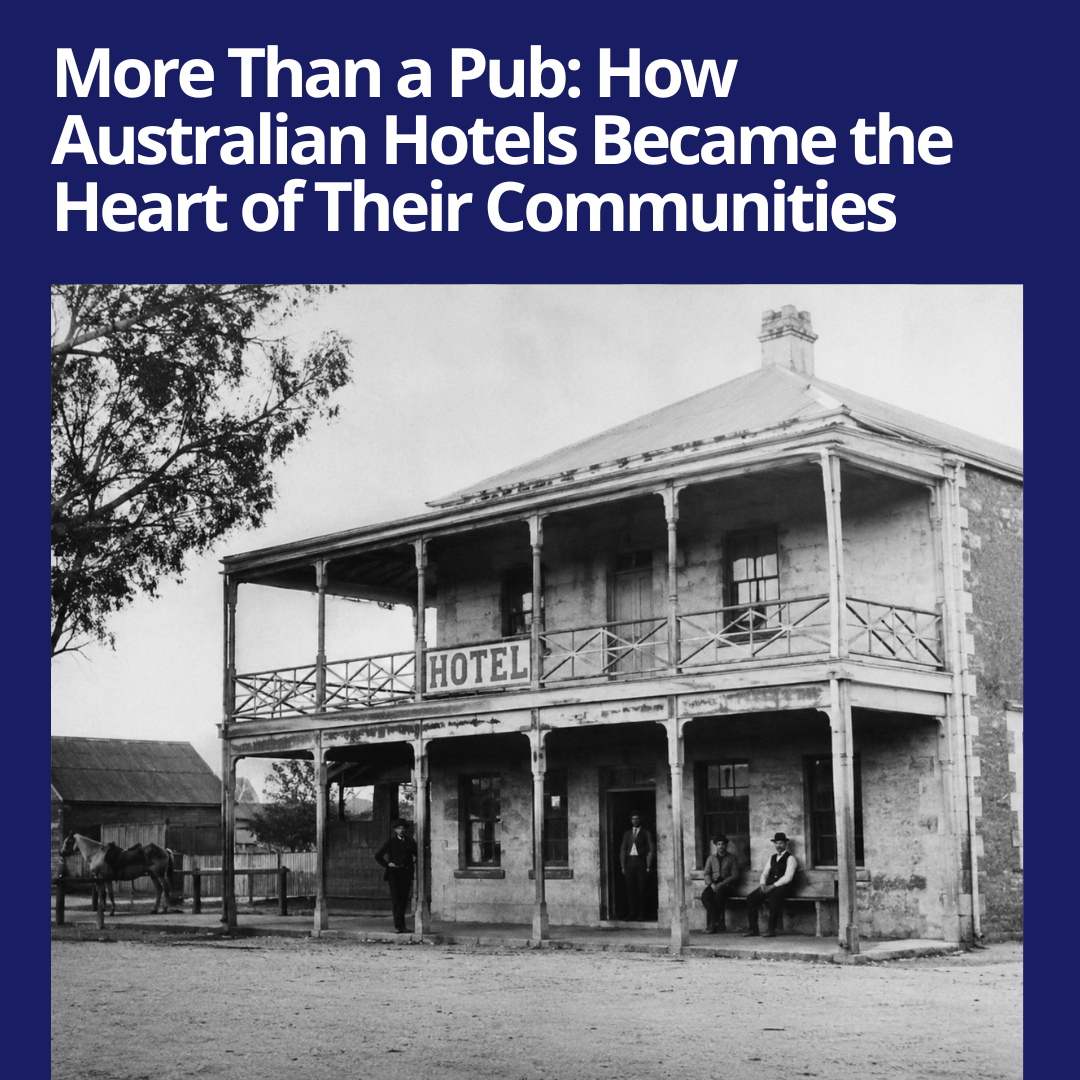
Long before community centres, social media and modern transport, the local pub was where Australians gathered, traded, celebrated and heard the latest news. It offered travellers a meal and a bed, gave local organisations somewhere to meet and provided growing towns with a social centre. In many regional communities, the hotel became far more than a place to buy a drink. It was the town’s dining room, meeting place, employer and unofficial information centre.
From early colonial settlements and gold rush towns to farming communities, mining regions and coastal destinations, pubs have helped shape the social and commercial history of Australia. Many continue to play that role today.
Why Pubs Were Established
Australia’s earliest pubs developed from a practical need for food, accommodation and shelter. Travel between settlements was slow and difficult. Roads were often basic, journeys could take several days and travellers needed places to rest, eat and stable their horses.
Inns and hotels were established along transport routes, near ports, at river crossings and within growing towns. They served settlers, merchants, stockmen, miners, coach passengers and workers moving between regions. These early establishments were not simply bars. A traditional inn might provide meals, overnight accommodation, horse yards, meeting rooms and local information. The publican was often one of the most recognisable business operators in the district.
The Role of Liquor Licences
Liquor licensing became an important part of regulating hotels throughout the Australian colonies.
New South Wales introduced colonial liquor laws during the early nineteenth century, before several of today’s states had been established as separate colonies. Victoria’s first hotels were therefore initially licensed under New South Wales law. Victoria later developed its own licensing system following separation from New South Wales in 1851.
Historical licensing records now provide valuable information about early publicans, hotel names, locations and changes in ownership. Records held across different states show how closely the development of licensed hotels followed settlement, transport routes and population growth.
However, liquor-licence history can also be complicated. A hotel may have changed names, moved buildings, transferred its licence, closed temporarily or been rebuilt after fire or flood. In some cases, the licence may be older than the existing hotel building.
This is why claims about Australia’s “oldest pub” are difficult to settle. Some are based on the date of the first licence, while others rely on continuous operation, the age of the building or continued trade from the same site.
There may never be one answer accepted by everyone and Australians have been known to enjoy a good debate over a pub table.
Gold, Mining and Rapidly Growing Towns
The gold rushes of the nineteenth century transformed many parts of Australia and created enormous demand for hotels. Thousands of miners, workers, merchants and immigrants travelled to goldfields across Victoria, New South Wales, Queensland, Tasmania and South Australia. Settlements expanded rapidly, sometimes faster than permanent infrastructure could be built. Hotels were often among the earliest businesses to open. Some began in temporary timber buildings, tents or simple roadside structures. As towns prospered, these were often replaced with substantial brick, stone or bluestone hotels. This is particularly relevant because the Rohan Pertzel article discusses historic pubs and hotel sales across Western Victoria.
On the goldfields, hotels offered food, accommodation, entertainment and a place to hear news or find work. They also became important commercial spaces where auctions, meetings and business dealings could take place. Hotels similarly followed the growth of mining regions, ports, railway towns and agricultural districts. Where people travelled, worked and settled, pubs were rarely far behind.
The Town’s Shared Living Room
For generations, the local pub has been closely connected to Australian community life. It is where families have celebrated birthdays, engagements and weddings. It is where sporting teams have gathered after a match and community organisations have held raffles, meetings and fundraisers. Regional publicans have traditionally supported football clubs, racing clubs, charities, suppliers and local events.
In smaller towns, the pub may be one of the few places where residents can regularly meet. Farmers, tradespeople, business owners, workers, travellers and families all cross paths there. That social connection can be particularly important in isolated communities. A local hotel may provide employment, attract visitors and help keep spending within the region. It may also be the first place approached when a community group needs sponsorship, a sporting club needs support or a family needs help. When a town loses its pub, it can lose far more than a hospitality business.
A Place for Travellers
Australian hotels also played an important role in the development of regional travel. Before cars and sealed highways, inns provided stopping points for people travelling by horse or coach. Later, hotels developed near railway stations, ports and major road routes.
Travellers relied on local hotels for accommodation, meals and knowledge about the road ahead. In coastal towns, hotels became part of the emerging holiday and tourism industry. In inland Australia, they offered essential hospitality to workers, commercial travellers and families moving between distant communities.
This connection remains strong today. Many regional pubs now attract visitors through destination dining, live music, historic architecture, accommodation and access to nearby tourism experiences.
Women Behind the Bar and the Business
Women have played an important role in Australian hotel history. Many women became licensees, publicans and hotel owners. Some took over a hotel following the death of a husband, while others entered the industry independently.
At a time when women had fewer opportunities to own businesses or earn independent incomes, hotelkeeping could offer financial security and a respected position within the community. Women were often responsible for accommodation, meals, staffing, purchasing and administration, as well as working behind the bar. The experience of female patrons was not always equal. Separate ladies’ lounges were once common, and women could be discouraged or excluded from public bars. As Australian society changed, hotel layouts, licensing practices and social expectations also evolved.
Pubs Reflected Australian Social Change
The history of Australian pubs is not entirely sentimental. Hotels have also been connected to debates about alcohol consumption, public behaviour and social exclusion. Temperance movements campaigned for tighter restrictions or the prohibition of alcohol, while governments introduced changing rules around licensing and opening hours.
During parts of the twentieth century, early closing laws helped create the notorious “six o’clock swill” in several Australian states. Workers would rush to hotels after finishing for the day and drink heavily before the bar closed. Some hotels changed their layouts to accommodate crowded public bars, reducing the emphasis on dining, entertainment and social activities. Closing times and licensing laws differed between states and changed over time. Their effects can still be seen in the design and history of many older hotels. These periods demonstrate that pubs have always reflected the broader society around them—both its strengths and its problems.
The Modern Australian Pub
Australian pubs have continued to evolve as drinking habits, tourism, food culture and customer expectations have changed. Many modern hotels now operate as diversified hospitality businesses rather than relying primarily on bar sales. A regional pub may include:
• A bar and bistro
• Accommodation
• Functions and weddings
• Live music and entertainment
• A drive-through bottle shop
• Gaming or wagering facilities, where permitted
• Tourism experiences
• Community events and sponsorships
• Family-friendly dining and outdoor areas
Food quality, local produce and visitor experiences have become increasingly important. Today’s strongest pub operators understand that customers are looking for more than a drink. They want welcoming service, quality meals, entertainment, accommodation and a genuine connection to the local area.
Every State Has Its Own Pub Story
Although Australian pubs share many traditions, their history and operating environment vary between states and regions.
Victorian goldfields hotels tell a different story from Queensland’s remote country pubs. New South Wales hotels reflect the growth of early colonial settlements, transport routes and mining communities. Tasmania’s historic inns are closely linked to some of Australia’s earliest towns, while South Australian hotels developed alongside agriculture, mining, transport and regional settlement.
Local legislation, climate, architecture, tourism and community needs have all influenced how pubs developed. That diversity is part of what makes the Australian hotel industry so interesting. There is no single model of an Australian pub. Each venue reflects its town, its owners and the people who have gathered there.
Buying More Than a Business
When someone purchases an Australian pub, they may be taking on far more than a commercial operation. They may be purchasing a hospitality business, an accommodation venue, a heritage building and a recognised local landmark. They may also be stepping into a story shaped by generations of publicans, staff, patrons and local families.
Every pub has its own history. Some were built to serve miners. Others welcomed coach passengers, railway workers, farmers, tourists or seaside holidaymakers. Many have survived fires, floods, economic downturns and changing community expectations. That history can become one of the pub’s most valuable assets. A strong operator can respect the past while introducing new ideas, improving the customer offering and building a sustainable business for the future.
At CRE Brokers, we understand that the sale of a pub is rarely just about bricks, liquor licences and financial statements. It is often the transfer of an important community institution from one operator to the next. The names above the door may change, but the role of the local pub continues - bringing people together and remaining part of the story of Australian communities.
Frequently Asked Questions About Buying and Operating an Australian Pub
Do you need a liquor licence to operate a pub in Australia?
Yes. A business generally needs an appropriate liquor licence to sell or supply alcohol.
Liquor licensing is regulated separately by each Australian state and territory, so the licence names, application requirements, trading conditions and approval processes vary depending on where the pub is located.
A hotel licence may allow alcohol to be sold for consumption on the premises and, depending on the licence and its conditions, may also permit takeaway liquor sales. Buyers should confirm exactly what the existing licence authorises rather than assuming every pub licence provides the same rights.
Does the liquor licence automatically transfer when a pub is sold?
Not necessarily.
When buying a pub, the purchaser will usually need to apply to the relevant state regulator to transfer the existing liquor licence or obtain the required approval to become the new licensee.
The business sale contract will often include conditions dealing with the liquor licence transfer because settlement may depend on the purchaser being legally able to operate the venue.
Buyers should begin the licensing process early and obtain advice from the relevant state liquor authority and their legal adviser.
How do you apply for a liquor licence?
The process depends on the state and the type of venue, but an application may require:
- Details of the applicant and business structure
- Proof of identity and fit-and-proper-person checks
- Information about the proposed business activities
- Requested trading hours
- A floor plan showing the proposed licensed area
- Evidence of Responsible Service of Alcohol training
- Planning, development or local council information
- A management, risk or harm-minimisation plan
- Public advertising or notification of the application
- Payment of the relevant application fees
Some applications may also require a community impact statement or assessment, particularly where the proposed venue, trading hours or takeaway liquor operations could affect the surrounding community.
Requirements differ between Victoria, New South Wales, Queensland, South Australia and Tasmania, so applicants should check the current rules with the regulator in the state where the hotel is located. Victoria, for example, requires supporting information that may include training evidence and a red line plan, while Queensland may require a risk-assessed management plan for certain applications.
What is a red line plan?
A red line plan is a floor or site plan showing the exact boundaries of the area covered by a liquor licence.
The licensed area is generally outlined with a continuous red line. It may include bars, dining rooms, bottle shops, function spaces, beer gardens and other areas where alcohol can be sold, supplied or consumed.
In Victoria, official guidance says a red line plan should be clear and readable, show the premises and surrounding streets, include a north point and label important areas such as bars, dining areas, kitchens and toilets.
Red line or licensed-boundary plans are also used in other jurisdictions, including New South Wales and Tasmania, although the exact plan requirements can differ.
Why is the red line plan important when buying a pub?
The plan helps determine where liquor may legally be sold, supplied or consumed.
A buyer should compare the approved licensed area with the venue’s current layout and operations. Problems can arise where a beer garden, function room, footpath area, renovated bar or bottle shop sits outside the approved boundary.
Changes to the building do not automatically change the licensed area. Approval may be required before altering, rebuilding or expanding parts of licensed premises. Queensland guidance, for example, states that prior approval may be needed before changing or increasing the licensed area.
What should buyers check about an existing liquor licence?
Before purchasing a pub, buyers should review:
- The licence holder’s name
- The type of licence
- Approved licensed areas
- Permitted trading hours
- Takeaway liquor permissions
- Licence conditions and endorsements
- Any compliance history or outstanding issues
- Required management or harm-minimisation plans
- Whether planned renovations need further approval
- The process and timing for transferring the licence
Public registers are available in several states and can help buyers confirm basic information about a venue’s licence. South Australia’s register, for example, allows users to check licensed venues, licence types and approved responsible persons, while Queensland’s online search includes the licensed area, trading hours and applicable conditions.
Do you need council approval as well as a liquor licence?
Possibly.
A liquor licence and planning or development approval are separate matters. A venue may need council approval for its land use, building works, patron numbers, signage, outdoor dining, noise arrangements or trading hours.
The requirements vary between states and councils. Victoria changed the interaction between planning rules and liquor licensing from 1 July 2025, meaning a planning permit is no longer automatically required simply because a venue has a liquor licence. However, planning controls may still apply to the proposed use or operation of the premises.
Buyers should investigate both the liquor licence and the property’s planning approvals before committing to a purchase.
How long does a liquor licence application take?
There is no single national timeframe.
Processing depends on the state, licence type, completeness of the application, advertising requirements, public submissions and whether further information is requested.
Queensland advises that new liquor or wine licence applications may take up to three months. Tasmania aims to determine complete applications within approximately four to six weeks, although some may take longer.
Licence transfers and more complex applications should therefore be addressed early in the buying process.
Can a buyer change the trading hours or licensed area after purchasing a pub?
A buyer can apply, but approval is not guaranteed.
Extending trading hours, adding a beer garden, expanding a bottle shop or altering the licensed boundary may require a formal variation application. Depending on the proposal, there may also be council, planning, noise, community-impact or advertising requirements.
Buyers should avoid building their financial forecasts around extended hours or additional licensed areas until the necessary approvals have been confirmed.
Who regulates liquor licences in the states where CRE Brokers sells pubs?
The relevant authorities include:
- Victoria: Liquor Control Victoria
- New South Wales: Liquor & Gaming NSW
- Queensland: Office of Liquor and Gaming Regulation
- South Australia: Consumer and Business Services
- Tasmania: Liquor and Gaming Branch, Department of Treasury and Finance
CRE Brokers sells pubs, hotels and hospitality businesses across Victoria, New South Wales, Queensland, South Australia and Tasmania. Buyers should seek current state-specific licensing, legal, financial and planning advice before purchasing or operating a licensed venue.
What should a buyer investigate before buying a pub?
Along with the liquor licence, buyers should consider the business financials, property or lease terms, staffing, gaming and wagering approvals where applicable, accommodation income, bottle shop operations, food compliance, planning approvals and the condition of the building and equipment.
A pub may combine several businesses under one roof. Understanding how each part is authorised and how it contributes to revenue is an essential part of proper due diligence.
Thinking About Buying or Selling a Pub?
Whether you are considering the sale of an established hotel or looking for your next hospitality opportunity, specialist industry knowledge can make a real difference.
CRE Brokers works with pub, hotel and hospitality owners and buyers across Victoria, New South Wales, Queensland, South Australia and Tasmania.
Speak with our experienced team for a confidential discussion about buying, selling or appraising a licensed hospitality business.
Disclaimer: This article has been prepared for general interest and informational purposes. Liquor licensing, planning and regulatory requirements vary between Australian states and may change over time. Historical records may also be incomplete or interpreted differently. While reasonable care has been taken in preparing this content, it should not be relied upon as legal, licensing, financial or planning advice. Readers should verify current requirements with the relevant regulator and obtain appropriate professional advice.