
Contact Us
1300 76 78 02Liquor Licences in Australia: Why Your Red Line Plan Matters 354
Published on August 26, 2026
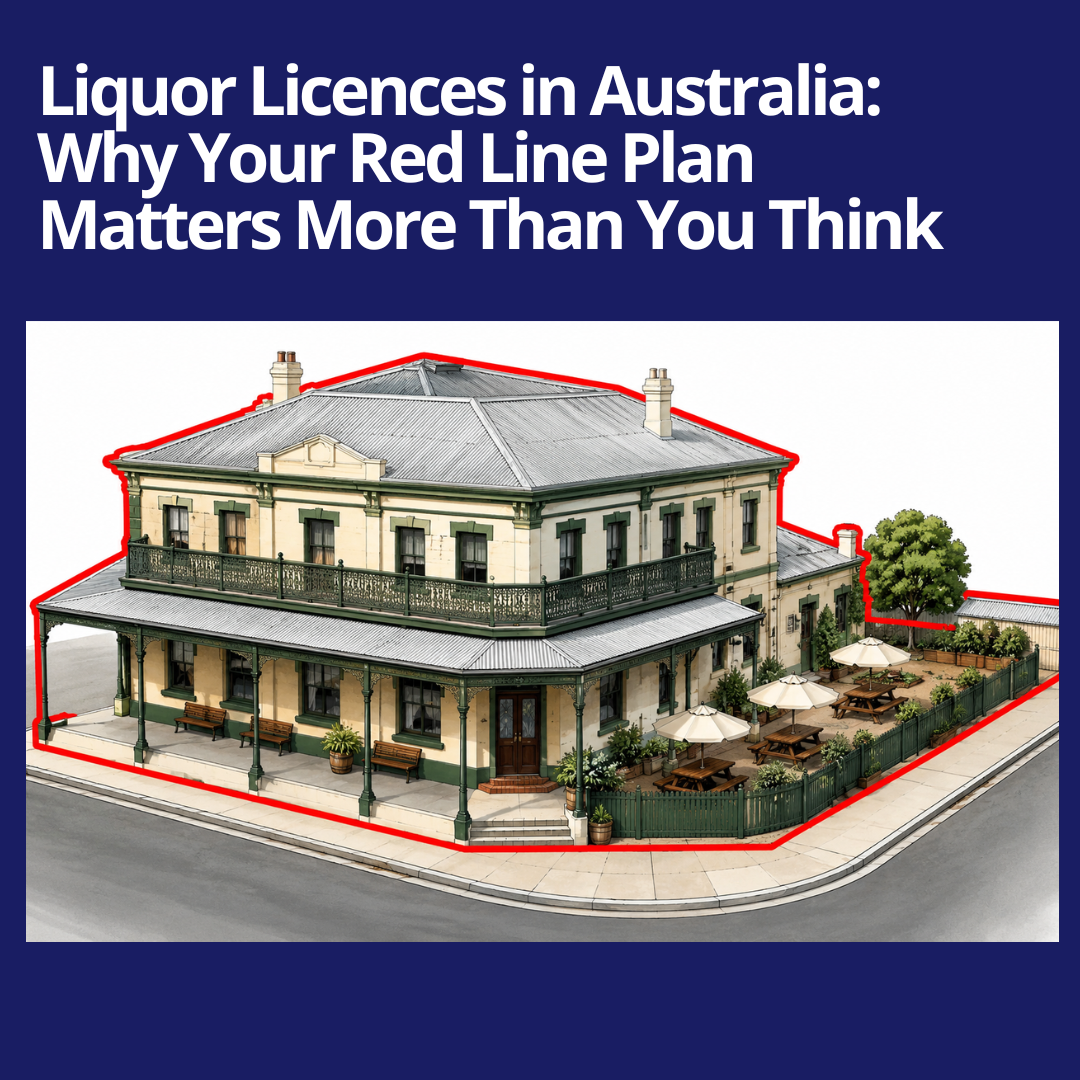
For anyone operating, owning or selling a pub, hotel, bar, restaurant, bottle shop or other licensed hospitality venue, the liquor licence is one of the most important documents connected with the business. But just as important is the plan that shows exactly where liquor is permitted to be sold, supplied or consumed.
Often referred to as a red line plan, this document identifies the licensed footprint of a venue and can become especially important when a property is renovated, expanded, leased or sold. A beer garden may be extended. A new function room might be created. Outdoor dining could be added. A bottleshop might be reconfigured.
The venue changes over time - but has the liquor licensing documentation changed with it?
What is a liquor licence?
A liquor licence gives a person or business authority to sell or supply alcohol, subject to the type of licence, approved premises, trading hours and licence conditions. Liquor licensing is regulated separately by each Australian state and territory, so licence types and requirements differ across the country. Depending on the jurisdiction, licences may apply to:
• pubs and hotels
• restaurants and cafés
• bars
• clubs
• bottle shops
• breweries, wineries and distilleries
• accommodation venues
• temporary events
A licence can also include conditions relating to trading hours, responsible service of alcohol, minors, entertainment and where liquor may be sold or consumed. So it is not enough to simply know that a licence exists. Owners and operators should understand what the licence allows and which parts of the premises it covers.
What is a red line plan?
A red line plan is commonly used to describe a floor or site plan that identifies the approved licensed area of a premises. The terminology varies between states, but the principle is straightforward: it shows the physical area covered by the liquor licence. That may include:
• public bars
• bistros
• function rooms
• beer gardens
• outdoor dining areas
• bottleshops
• courtyards
• terraces
• entertainment areas
In simple terms, it is the physical footprint of the licence.
Why does it need to stay current?
Hospitality venues often evolve over time. Renovations, extensions and changes to the layout can all affect the way a venue operates. However, physically changing a space does not necessarily mean the approved licensed area changes automatically.
Depending on the state and the alteration, approval may be required to amend the licensed boundary. A good example is a beer garden. A pub may originally have a small licensed outdoor area. Several years later, that area is expanded and new tables are added. To staff and customers, the whole area feels like part of the venue. But unless the licensing documentation was updated, the approved plan may still show the original boundary. That is why liquor licensing should be considered whenever substantial changes are made to a venue.
Why this matters when selling
Liquor licensing often comes into focus during a sale. A purchaser, solicitor, financier or licensing adviser may review the licence and approved plans during due diligence. They may want to know:
• Is the beer garden included?
• Is the function room licensed?
• Does the bottleshop layout match the approved plan?
• Have renovations been reflected in the licensed area?
• Are outdoor areas properly covered?
• Are there any licence conditions affecting the premises?
Finding discrepancies does not necessarily stop a sale, but it can create questions, additional work and delays. Checking these documents before going to market gives the seller time to investigate anything that does not line up.
What About the Freehold Owner?
Liquor licensing is not only relevant to the tenant or business operator. Freehold owners of pubs, hotels and other licensed properties should also keep an eye on the licensing documents connected with their premises.
The licensee may be the tenant or operator rather than the property owner, but the licence still relates to a specific premises. That makes the licensed area relevant to the underlying property as well. Over the life of a lease, a tenant may extend a beer garden, alter a bottleshop, move a bar, create a function space or make other changes to the venue.
Where those changes affect the licensed footprint, it is sensible for the freehold owner to know what has been approved and to keep copies for their own records.
What should a freehold owner keep?
As a practical property-management measure, freehold owners should consider keeping copies of:
• the current liquor licence
• the approved licensed-premises or red line plan
• licence number and type
• approved trading hours
• significant licence conditions
• approved alterations
• changes to licensed boundaries
• relevant licensing correspondence
This does not mean the landlord takes over the tenant's responsibilities as licensee. It simply means the owner has a clear record of approvals connected with their property. That can become particularly useful when:
• a lease is renewed
• a new tenant takes over
• the tenant sells the business
• the freehold is sold
• the tenant leaves
• the property is refinanced or valued
Is the liquor licence attached to the building?
This is often how the concept is described, but it is more accurate to say that a liquor licence generally relates to specific licensed premises. The person or company operating under the licence may change, but the licence is connected with a defined location.
The rules around transfers, new operators and vacant premises differ between states, so owners should check the requirements that apply in their jurisdiction. For a freehold owner, the key point is simple: even if you are not the licensee, the licensing position of your property still matters.
It Can Matter to the Value and Marketability of a Property
For a freehold pub or hotel investment, the ability to operate as a licensed venue can be an important part of the property's commercial appeal. A purchaser may want to understand:
• what type of licence applies
• which areas are licensed
• whether the current layout matches the approved plan
• whether major renovations have been reflected
• whether any licence conditions affect the property
Clear, current documentation can make due diligence easier and give buyers more confidence in what they are acquiring.
Selling? Review the Licence Early
For anyone considering selling a pub, hotel, bottleshop or other licensed hospitality business or property, liquor licensing should form part of the pre-sale preparation. Before going to market, consider locating:
• the current liquor licence
• the approved licensed-premises plan
• licence conditions
• approved trading hours
• any special authorisations
• recent amendments
• relevant council approvals
• lease documentation
If you are unsure whether the plan reflects the current layout, investigate it early.
At CRE Brokers, we regularly deal with pubs, hotels, accommodation businesses and licensed hospitality properties across Australia. Having your documentation organised before a sale can help buyers understand the opportunity and reduce avoidable delays through the transaction.
Liquor Licence & Red Line Plan Q&A
What is a red line plan?
It is a plan showing the approved boundaries of a licensed premises. The name comes from the traditional practice of outlining the licensed area on the plan, although terminology and requirements vary between states.
Does every liquor licence have a red line plan?
Not necessarily under that exact name. Depending on the jurisdiction and licence type, there may be an approved floor or site plan identifying the area covered by the licence.
Why does the licensed boundary matter?
Because adding a deck, beer garden, function room or outdoor dining area does not necessarily mean that space automatically becomes part of the approved licensed premises.
When should the plan be reviewed?
It is worth checking whenever you:
- renovate
- extend a beer garden
- add outdoor dining
- move or add a bar
- create a function area
- substantially change the internal layout
- prepare to sell the business or freehold
Can I simply redraw the red line myself?
You can prepare plans for discussion or an application, but formally changing the licensed area generally requires following the relevant licensing process.
Is a liquor licence attached to the building?
A liquor licence generally relates to specific licensed premises, although the licensee may be a tenant, company or operator rather than the freehold owner.
Should a freehold owner keep a copy?
Yes. Even where the tenant is the licensee, it is sensible for the freehold owner to retain copies of the current licence, approved plan and any significant amendments affecting the property.
What happens when a pub is sold?
The process differs between states and depends on the transaction. A transfer or other licensing application may be required, so buyers and sellers should obtain advice early.
Does a liquor licence add value to a property?
There is no simple formula, but the ability to lawfully operate a licensed hospitality business can be commercially important. Clear and current licensing documentation can also help during due diligence.
Where can I get a copy of my current licence or approved plan?
Start with your existing property or business records. If you cannot locate the current documents, contact the relevant state or territory liquor licensing authority or a liquor licensing professional.
When should I check all this if I am thinking of selling ?
Before you list, wherever possible.
That gives you time to investigate any gaps before a purchaser starts asking questions.