
Contact Us
1300 76 78 02Buying a Motel? Understand the Numbers Before You Make an Offer 10
Published on November 10, 2026
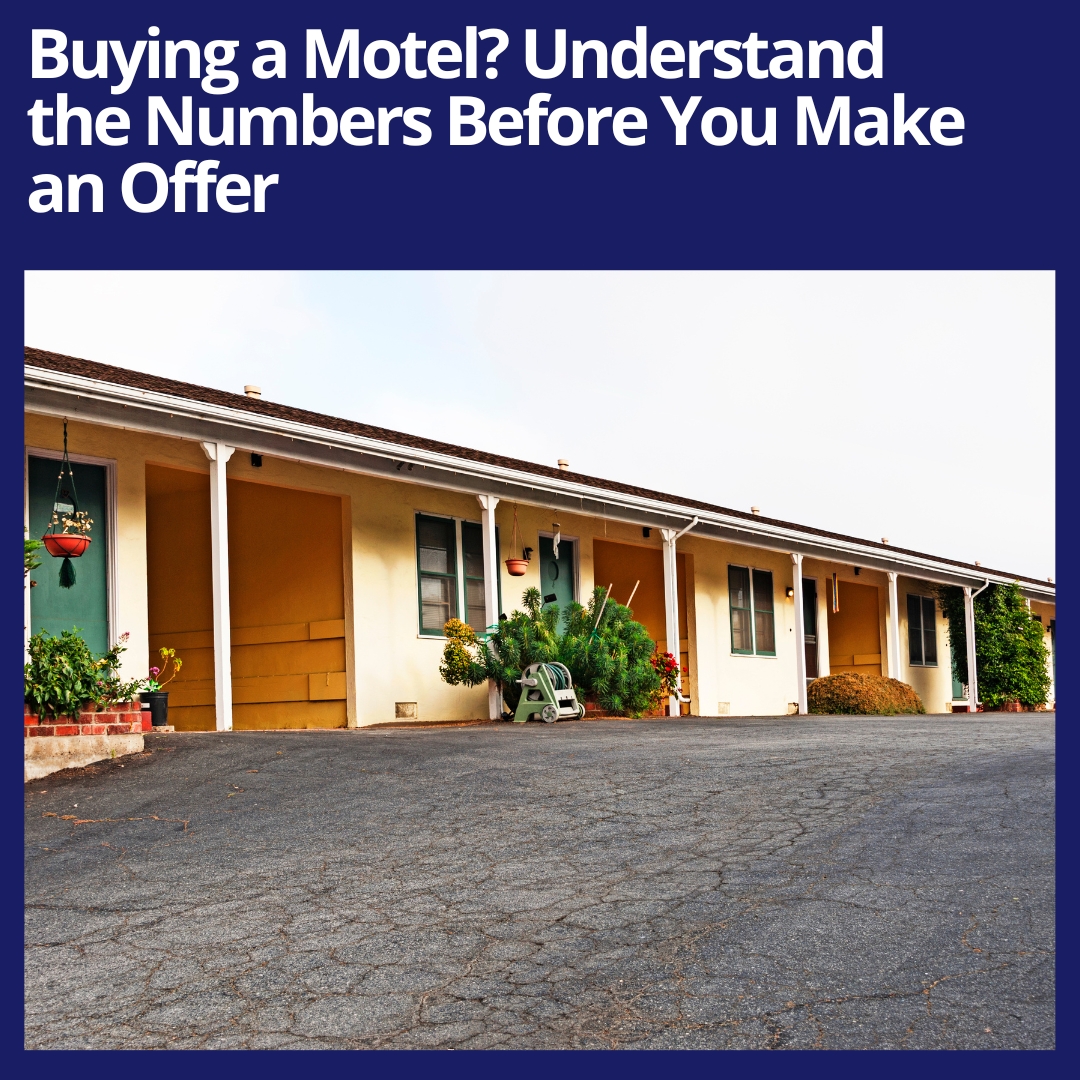
Buying a motel can be an attractive opportunity, whether you're entering the accommodation industry for the first time or expanding an existing portfolio.
But before making an offer, it's important to understand what the business's financial figures actually mean.
Two motels may generate similar annual revenue yet deliver very different returns. Location, operating costs, staffing, room rates and lease arrangements all influence performance.
Occupancy: How often are the rooms sold?
Occupancy measures the percentage of available room nights that are sold over a given period.
A motel achieving 75% occupancy is selling approximately three-quarters of its available room nights.
However, occupancy alone doesn't tell the full story.
A regional motel in Queensland may experience stronger demand during winter, while accommodation businesses along Victoria's Great Ocean Road or South Australia's Fleurieu Peninsula may depend more heavily on summer holidays and weekends.
Understanding seasonal trading patterns is essential when assessing annual results.
Average daily rate: What are guests paying?
Average Daily Rate (ADR) measures the average room revenue earned for each occupied room.
A motel with strong occupancy but low room rates may generate less revenue than a property with slightly lower occupancy and higher rates.
Buyers should review how room pricing compares with competing properties and whether there's scope for improvement.
Revenue per available room: Looking at the bigger picture
Revenue per Available Room (RevPAR) combines room revenue and room availability into a useful performance measure.
For example, a motel achieving an ADR of $180 and occupancy of 70% would have a RevPAR of $126.
This helps buyers compare accommodation businesses with different room rates and occupancy levels.
However, RevPAR is a revenue measure, not a profit measure. Operating expenses must still be considered.
Understanding adjusted net profit
Adjusted net profit is frequently used when assessing accommodation businesses. It may involve adjustments to reported financial results for items such as owner-related expenses, interest, depreciation or certain non-recurring costs. Not all adjustments are appropriate in every transaction.
A purchaser should ask their accountant to review the calculations and understand what staffing, management costs and ongoing expenses will apply under their ownership.
A motel currently managed by its owners may require additional wages if purchased by an investor intending to employ a manager.
Don't overlook the property's condition
Financial performance is only one consideration.
Buyers should also examine maintenance requirements, room refurbishment, air conditioning, bathrooms, roofing, accessibility and other capital expenditure.
For leasehold motel purchases, the lease should clarify responsibility for repairs, replacement equipment and major works.
A profitable business can still require substantial investment after settlement.
Frequently Asked Questions
What financial records should I request when buying a motel?
Typically, buyers should review several years of financial statements, tax returns, BAS, occupancy records, room revenue and operating expenses.
Is high occupancy always a good sign?
Not necessarily. Buyers should consider achieved room rates, profitability, maintenance costs and seasonal demand.
Is buying a leasehold motel different from buying a freehold motel?
Yes. A leasehold buyer generally acquires the business and leasehold interest, while a freehold going concern purchase generally includes both the operating business and the property.
Find the right motel opportunity
CRE Brokers specialises in accommodation business and property sales across Australia.
Our brokers understand the factors that influence motel performance, from regional market conditions to lease terms and trading history.
Considering buying a motel in Victoria, NSW, Queensland, South Australia or Tasmania? Contact CRE Brokers on 1300 76 78 02 or explore our motel listings at www.crebrokers.com.
This article provides general information only and should not be relied upon as legal, financial or taxation advice. Requirements vary depending on the transaction, business structure and Australian state or territory. Buyers and sellers should obtain independent professional advice relevant to their circumstances.